
Issue 5 – Stating Project Objectives in Technical Rather than Business Terms

Bridging the gap between IT and business will solve many of the problems on IT Projects
Technology team members should not work in isolation. Remember, the IT solution is owned by the business in which it benefits.
According to the Project Management Institute there are several reasons to initiate a project:
- Market Demand
- Business Need
- Customer Request
- Technological Advance
- Legal Requirement
- Social Need
For each of the above reasons to initiate a project, all serve to benefit business. Even a Technological Advance benefits at least one businesses in the organization. So, doesn’t it make sense that the business need be front and center in the project objectives? For many seasoned Project Managers this is a no-brainer. Nonetheless may terrific software developers get promoted to Project Manager and focus on the technical rather than the business needs.
Starting a project without clear objectives, and a prepared plan of action immediately sets the project up for failure
We create the project objectives when we create the Project Charter. Your business suffers when you try to implement a plan without clarity and forethought. You can define the scope of the technical and organizational components of the project, how many resources you’re willing to allocate to the entire project, establish clear deadlines and the expected results. While one cannot predict the final outcome of the project, certain measures can be implemented against stating project objectives in technical rather business needs and of course the ultimate risk of project failure.
There are several ways to write project objectives to minimize the risk of project failure. As a matter of fact this blog’s purpose is to provide best practices, in creating project objectives to minimize this dreadful risk. Here are five practices in creating effective project objectives based on the needs of the business:
1) Align Project Objectives with Business Unit and Corporate Objectives
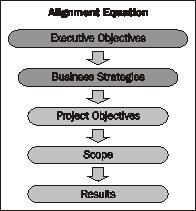
It’s important to initiate projects with objectives that align with the organization’s business objectives. Projects can help you establish your place in the market, increase business, or improve your business reputation. Even with a project plan in place, there are various reasons that can contribute to your project failing to meet your business objectives. Careful planning can help avoid these pitfalls.
Companies develop their business objectives based on the goals they set forth for the quarter or year. A best practice is for the business units to align their objectives with that of the business as a whole. If objectives are unclear, it could leave a business to initiate projects that don’t accomplish the company’s objectives.
Objective alignment is a powerful project management technique that not only validates the reason for the project but also demonstrates to the team their ongoing value to the business and organization. When you engage project teams with their work through objective alignment, they become committed to the project and achieve higher levels of individual performance. Fully engaging the team in this way only becomes possible when individual team members understand and accept-the project objectives.
2) Align Project Objectives with Deliverables
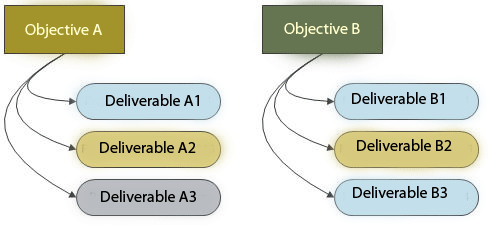
In addition to alignment with the corporate objectives project objectives should be aligned with at least one deliverable. If you’re not building something to satisfy each objective, you might wonder how you’re going to successfully achieve the objective.
There happens to be a connection between the project objectives and the project deliverables. Seeing the connection will help you ensure that the information in your charter is articulated correctly. Let’s begin with definitions:
Project Objectives
These objectives describe the purpose of the project and what the project will achieve from a business perspective. Generally, the project is considered to be successful if the project objectives are met successfully.
Project Deliverables
Deliverables describe the tangible products that are being built by the project team. All projects produce deliverables.
After completing the project objectives and deliverables, go back and make sure that they’re all in alignment.
Similarly you don’t want to include deliverables in your project scope that do not help to achieve the project objectives. Since the objectives describe the purpose of the project, why would you want to build deliverables that do not help you achieve your objectives?
Bringing project objectives in alignment with deliverables
If you have an objective without a deliverable, you need to validate whether the objective is really important. If it is, then you will need to add or modify the deliverables to satisfy the objective. If it turns out that you have defined all of the deliverables that you intend to build, then you should remove the objective. If you’re not building a deliverable to support it, the objective is most likely invalid for the Charter.
If you have a deliverable without an objective, then you need to ask whether the deliverable is really important to your project. If it isn’t, then remove it from the project. If the deliverable really is important, you need to work with the sponsor to determine the business objective for creating it. It’s likely there’s a project objective that would justify building the deliverable, but it is not yet identified for the Charter.
A cross-check of objectives and deliverables will help ensure that the Project Charter identifies all of the valid objectives and deliverables that are expected of the project.
3) Creating S.M.A.R.T. Objectives
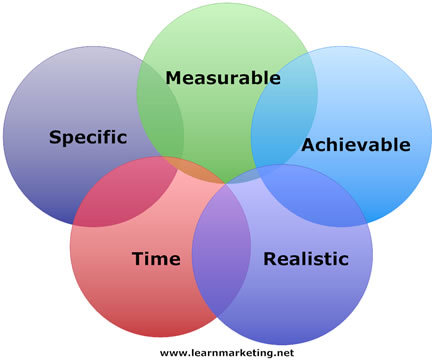
Project objectives are best written with the SMART rule applied. When writing the project objectives this mnemonic provides a guide in setting objectives for not only the project but also for employee performance and personal development. The letters in SMART represent the characteristics of a complete and effective objective statement. That is, Specific, Measurable, Attainable, Relevant and Timely. More recently SMART has been expanded to SMARTER. The additional criteria are Evaluate and Reevaluate and, they are intended to ensure that project targets are not forgotten.
To qualify as S.M.A.R.T., an objective or goal must be:
SPECIFIC. Specific goals let people know exactly what’s expected of them with no room for misinterpretation. Specific goals should be able to answer the following:
- What is to be accomplished in business terminology?
- Why is this project important or beneficial to the business?
- What are the requirements or constraints involved?
- Where is this to be completed?
- When must this be done?
MEASURABLE. When setting project objectives the Project manager must also set specific criteria for measuring progress against those goals (think Key Performance Indicators or KPIs). This gives your project team a way to stay on track, aim for target dates, and reach milestones. This will also serve as ongoing motivation for the team.
ATTAINABLE. Stating overly lofty goals that are truly unattainable are automatically setting the project up for failure. Not only will unattainable objectives not motivate your team, it will do just the opposite, including mid-project turnover. It is through setting ambitious, yet realistic, goals that will inspire project teams to fully leverage their talents and thereby achieve both project and personal goals.
RELEVANT. Project teams must be able to see how a specific goal is relevant to their work. It is through keeping objectives relevant that you help employees better understand their connection to both the company’s and project ‘s objectives, and consequently the strategic importance of their individual goals.
TIMELY. To be most effective, goals must be structured around a specific timeframe to provide a sense of urgency. This serves to motivate individuals to begin working on their goals as soon as possible.
4) Leveraging Technology to Achieve Objective Alignment
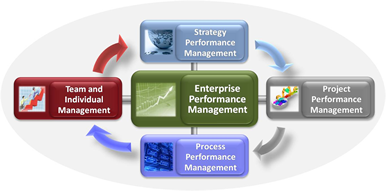
The business sponsor and project manager needs tools that can help them communicate and align objectives with the corporate objectives and deliverables with greater clarity and efficiency. To accomplish this manually is sometimes a difficult task.
A new breed of web-based, automated performance management system that includes objective and goal alignment is available off the shelf. And today, small and mid-sized businesses are increasingly using these automated systems to increase productivity and improve their bottom lines.
5) Get formal sign-off of Project Definition
 A Project Definition document should be prepared and formally signed off by the Steering Committee. This document defines not only the objectives, but also the goals, benefits, deliverables, exclusions, assumptions, business sponsors, responsibilities, estimated costs and timescale, and serves the following purposes:
- Clearly defines the objectives and scope of the project.
- Provides management and team members with a common view and clear understanding.
- Provides a good starting point for the subsequent definition of better detailed documents, for example the Project Plan, Project Budget and Functional Requirements Specification.
Hopefully this posting served it’s objective, that is, to minimize the risk of project failure. As always, feel free to comment or add any additional strategies for creating effective project objectives.
The next in this series of Why Projects Fail will be “Choosing the RIGHT Project Manager”. Placing the same value on the project manager as the complexity of the IT project is something that is often overlooked. The focus of this next post will concern the skills necessary for successful Project Managers.
Thanks for reading!


